This is Part 2 of a three-part series. Part 1 ran on the Spent Goods blog, Part 3 continues there. Read all three to complete the odyssey.
In Part 1 of this series, I wrote about bread, importance of regional food specialties, and the strange asymmetry of small producers paying to prove their methods are better while industrial producers mostly just clear a baseline safety bar. That trip to Nice was about more than food, though. I went in the middle of a heatwave — one I lived through myself, and one I’ll get into more personally in Part 3 — and it left me paying much closer attention to how France is actually adapting to a warming world.
What struck me most, once I started paying attention, was how differently France seems to treat the whole question of adapting to a hotter world. Likely out of immediate necessity vs a future problem to solve later, it shows up in small, unavoidable ways, built right into daily decisions.
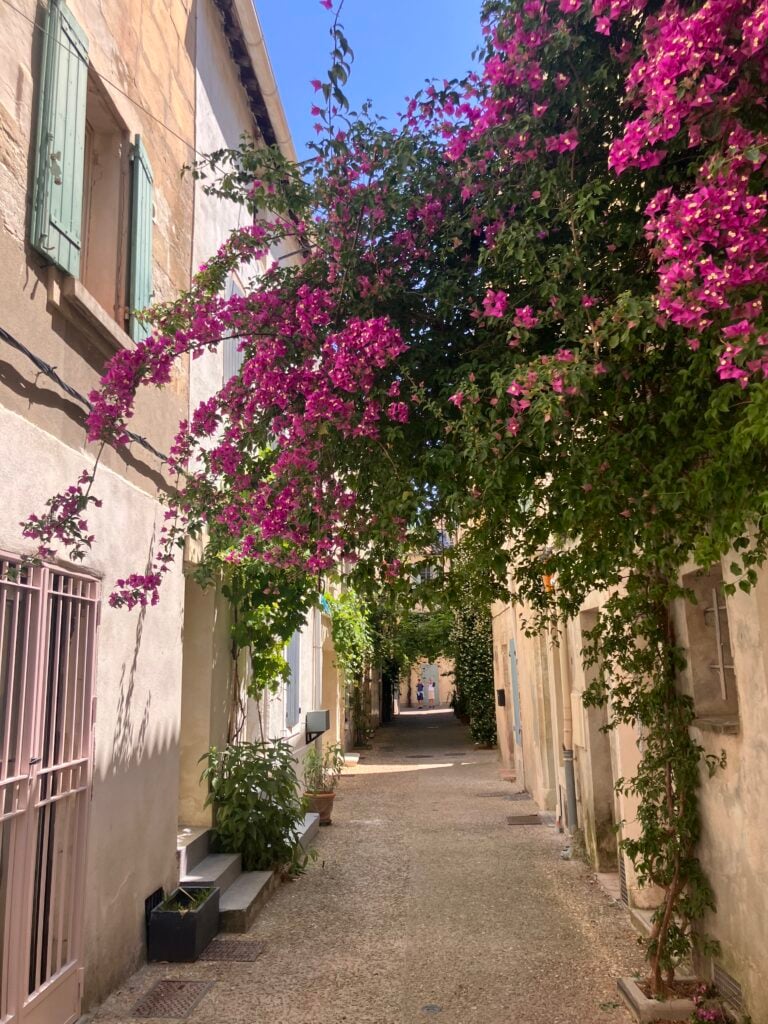
Take air conditioning. Coming from Canada, where AC is just assumed, I was surprised how many French homes and even public buildings don’t have it — and it’s not simply that they haven’t gotten around to installing it. A lot of it comes down to how the buildings themselves were built: thick stone walls, high ceilings, wooden shutters, narrow shaded streets, all designed centuries ago to keep interiors cool without any mechanical help at all. But there’s a cultural layer to it too. AC has historically been seen by some in France as excessive, even a bit distasteful — something other countries lean on instead of just adapting. There’s a genuine, ongoing debate happening in France right now about whether that instinct still holds up as heatwaves get more frequent and more intense, or whether it’s become a stubborn habit that’s putting people at real risk. Having lived through one of those heatwaves myself, I understand both sides of that argument a lot better than I did before I left.
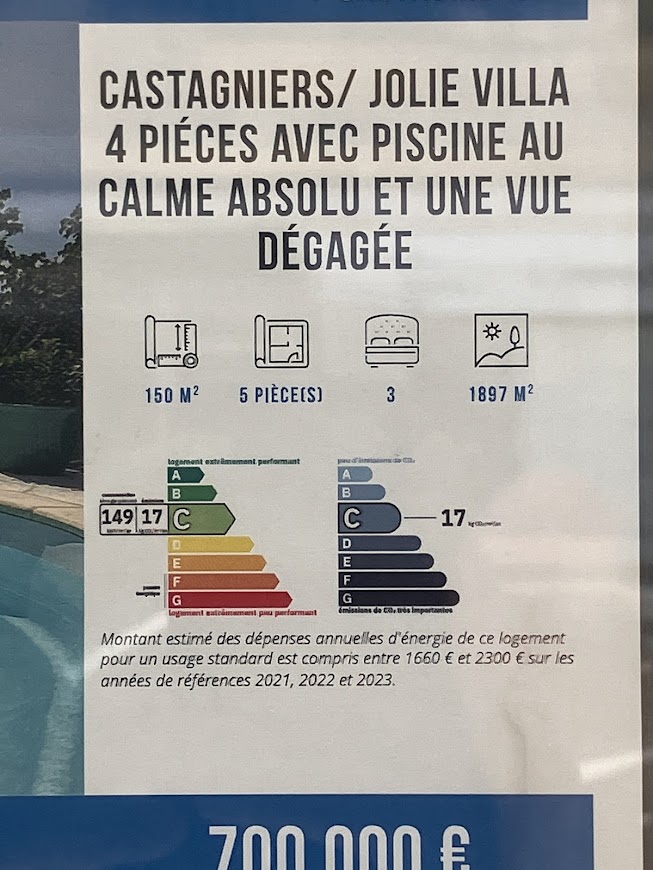
Then there’s energy bills — which, it turns out, is where a lot of the real behavior change actually happens. I came across a real estate listing in a small town outside Nice for a villa with a pool, and stapled right to the listing was something I’d never seen before: a mandatory energy performance certificate, graded A through G, estimating exactly what that home’s annual energy bill would look like. Not a vague “energy efficient!” marketing line — an actual number, sourced from real consumption data, sitting right next to the price. France requires this on every home sale and rental listing. The worst-rated homes are being phased out of the rental market entirely over the next several years. It’s a strange thing to feel inspired by a real estate sign, but I did — it’s such a simple, honest way to force a climate cost into a decision people are already making anyway.
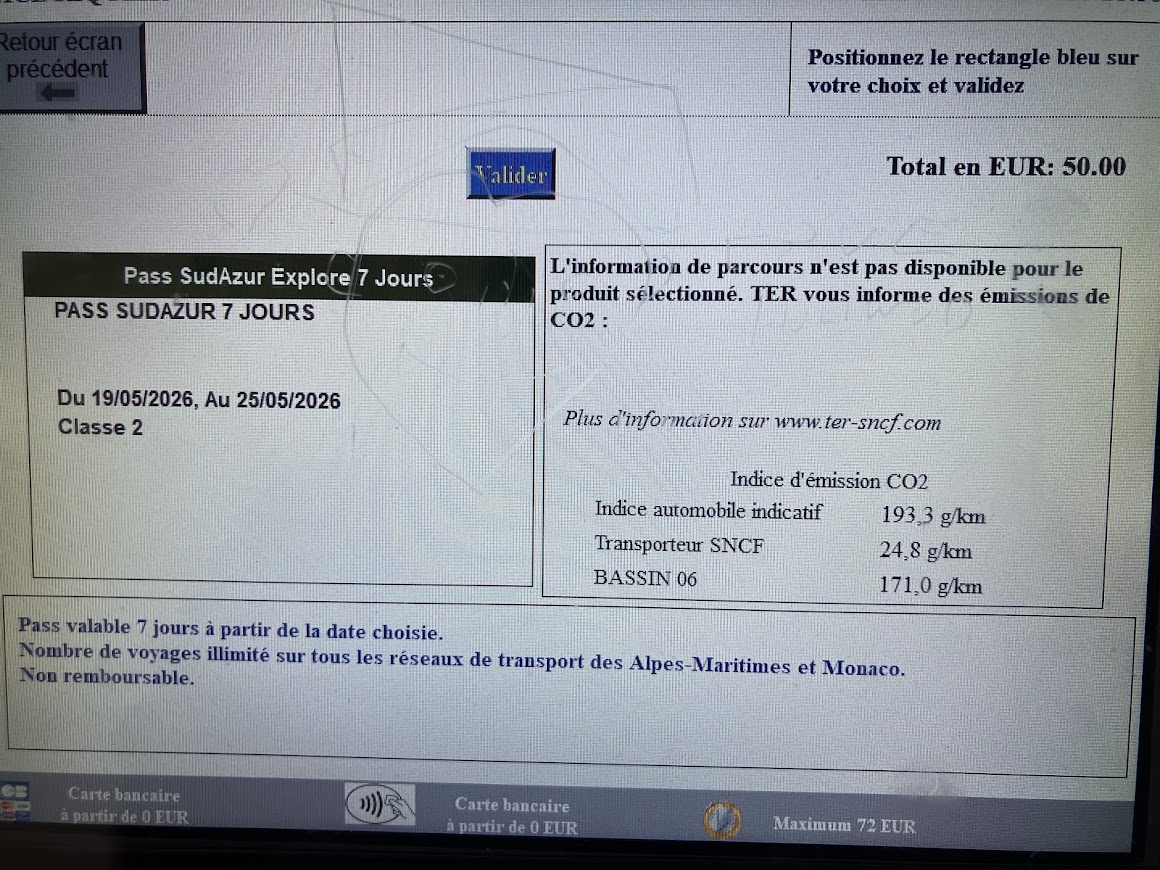
I saw the same philosophy on a train ticket machine in Nice, of all places. Next to the price, it showed the CO2 emissions for that exact trip by train against what the same distance would cost in emissions by car. The train came out to a fraction of the car’s footprint — not a vague “trains are greener” claim, an actual number, printed right where you’re deciding how to get somewhere. France passed a law requiring this kind of comparison wherever a trip gets booked, and it’s a small thing, but it’s the kind of small thing that adds up when it’s in front of you every single time you buy a ticket.
And underneath all of it, there’s a consumer carbon tax — one most visitors probably never notice, because it isn’t a separate line item anywhere. It’s baked directly into the price of fuel: gasoline, diesel, natural gas, heating oil, the things people are already paying for without a second thought. No separate bill, no new form to fill out. Just a slightly higher price every time you fill up or heat your home, nudging the math a little further toward the lower-carbon choice, whether or not anyone consciously notices it happening.
What ties all of this together, for me, is that none of it asks people to care about climate change in the abstract. It just puts a real number in front of them at the exact moment they’re already making a decision — where to live, how to get somewhere, what to fill the tank with. You don’t have to be an environmentalist to feel it. You just have to buy a train ticket, or rent an apartment, or fill up your car.
I said I’d get more personal about that heatwave, and I meant it. In Part 3, back on the Spent Goods blog, I write about what it actually did to me while I was there. It’s the part of this odyssey I found hardest to write, and the one that ties the whole trip together, and what I’m starting to do about it.

Managing Director – Organic Lifestyle, Spent Goods & AI Curious